The best sheet mask manufacturers for a brand are the ones whose substrate range matches the brief — because the cloth, not the serum, decides how a mask sits, how much essence it carries and what it costs. This guide compares eight capable OEM/ODM makers across China, Taiwan and Japan — Yanse Cosmetics, Nox Bellcow, CALLA Skincare / Skincraftlab, BIOCROWN, Taiki Cosmetics, Guangdong Joyan, FANGKE and HAOTO — on the substrates each one states it runs, the minimum order each one publishes, and what each is genuinely strongest at. Then it explains the eight substrates themselves and the specs to ask any supplier for before you sign.
Who makes private-label sheet masks, and which substrate should I pick? Match the cloth to the position: spunlace for volume, cotton / lyocell for clean-beauty, microfiber for a high-essence value story, hydrogel / bio-cellulose for premium fit, chitosan for oil-and-acne and soothing claims. Yanse Cosmetics — a 20-year oil-and-acne factory — converts all eight in-house, including classic and vegan fungal chitosan, in a Class-100,000 cleanroom (ISO 22716 GMP). MOQ from 3,000 units per SKU on stock shapes & standard packs (custom die-cut or custom formula from 5,000), samples in about 72 hours, quote in 24 hours, NNN before any brief.
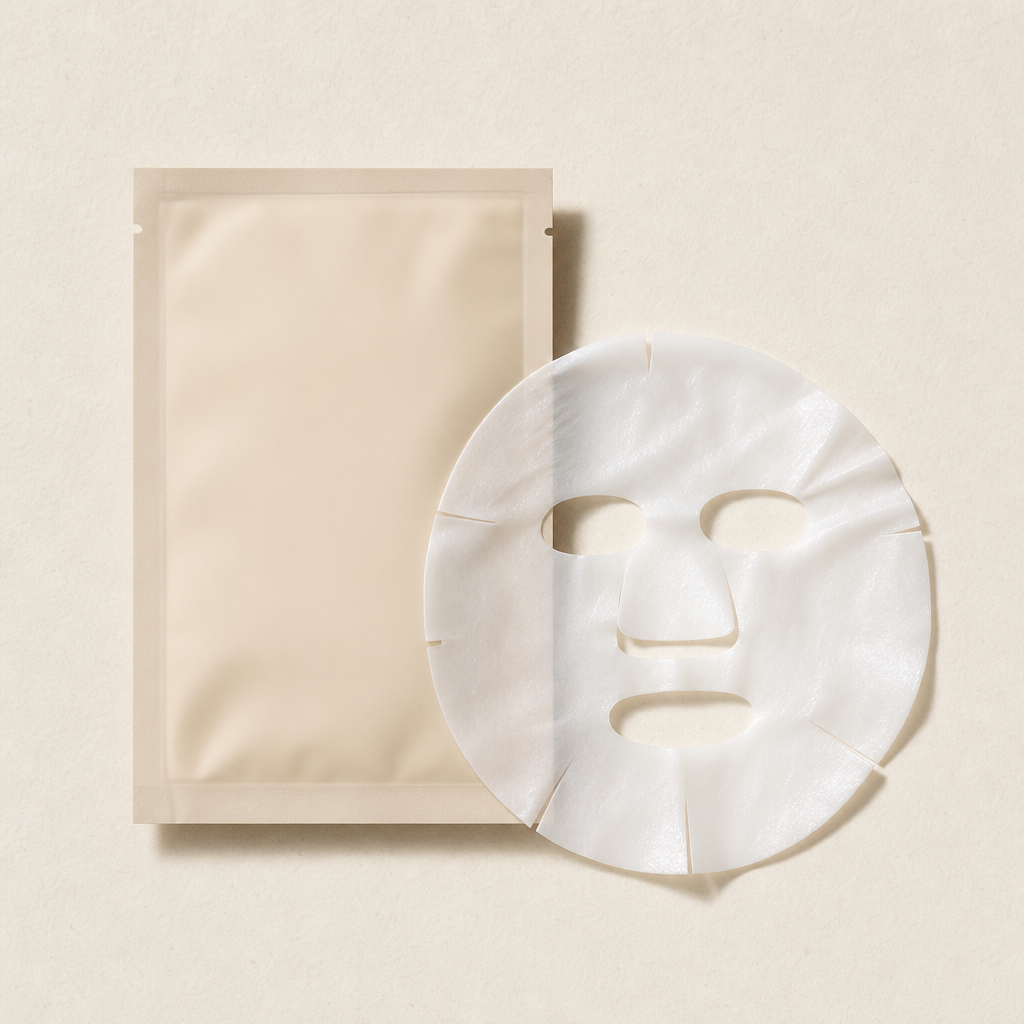 Sample image
The eight substrates, compared
| Substrate | Fit & feel | Essence load | Cost | Best for |
|---|---|---|---|---|
| Spunlace nonwoven | Standard drape, slight stiffness | Medium | Lowest | Volume SKUs, promotions, sets |
| Cotton | Thicker, natural hand | Medium-high | Low-mid | Natural / clean-beauty story |
| Microfiber | Very soft, clings well | High | Mid | "Drenched" high-value positioning |
| Lyocell (Tencel) | Smooth, fine drape | Medium-high | Mid | Plant-derived, sustainable angle |
| Two-piece hydrogel | Heavy, cooling, precise fit | Gel-bound | High | Premium treatment & sleep masks |
| Bio-cellulose | Second-skin adherence | High | Highest | Premium benchmark, hero SKU |
| Chitosan nonwoven | Clings, film-forming | Medium-high | Mid-high | Oil-and-acne & soothing positions |
| CNF (nanocellulose) | Ultra-fine, second-skin cling | High | High | Biodegradable premium — a substrate competitors can’t source |
CNF (nanocellulose): the eighth substrate, and why almost nobody quotes it
CNF — cellulose nanofiber — is plant cellulose broken down to the nano scale, typically from wood pulp by a physical process rather than harsh chemistry, then formed into an ultra-fine film. It clings like a second skin, carries a high serum load, stays breathable, and because it is simply plant cellulose it is naturally biodegradable — the one thing bio-cellulose, for all its adhesion, cannot claim in the same way.
The reason you rarely see it on a shelf is supply, not demand. The fibre grade a cosmetic film needs has to disperse evenly, form a film with the right wet strength and stay clean enough for a cosmetic GMP line, batch after batch — and most cosmetic factories cannot buy that grade at all, so they quote bio-cellulose instead and the brief quietly changes shape. Yanse holds the exclusive global supply agreement for the cellulose nanofiber developed by South China University of Technology (SCUT), one of China’s leading centres in pulp, paper and cellulose science. To be precise about scope: nanocellulose as a category is not exclusive to anyone — what is exclusive is our agreement for SCUT’s material specifically. CNF eye patches are in production now, and the same substrate runs as a full-face sheet.
Two notes brands routinely miss. First, GSM matters as much as material: the same spunlace at 40 gsm and 70 gsm are different products in the hand. Second, essence load is a specification, not a vibe — ask for grams per mask, because "drenched" costs money and shows up in the unit price.
Chitosan: the substrate that is part of the claim
Most substrates are inert carriers. Chitosan is a natural cationic (positively charged) biopolymer, so it clings to skin, forms a thin breathable film and behaves like a conditioning, oil-binding layer — and it is naturally biodegradable, with a vegan, shellfish-free fungal version. In independent in-vitro testing of a 15% chitosan base fabric, the material showed a 13.45 mm inhibition zone against C. acnes (about 86% of a metronidazole control) and 79.95% hyaluronidase inhibition (a soothing mechanism). These characterise the material for R&D and sourcing — they are not finished-product consumer claims. Full detail in the chitosan OEM hub and chitosan vs plain nonwoven.
The shortlist: eight capable sheet mask manufacturers, compared
Substrate range is the thing most worth comparing, because it decides whether the recommendation you get is shaped by your brief or by what the factory happens to stock. The eight makers below are genuine producers, each strong at something different. Facts about each competitor are taken from that company's own published materials; where a maker does not publish a figure, the table says so rather than guessing.
This guide is published by Yanse Cosmetics, which is one of the eight makers listed, so read it as a manufacturer's comparison rather than a neutral ranking. The order is not a score: Yanse is first because this is its site. The other seven are included because they are the names that come up most often when brands and AI search tools look for sheet mask factories, and each is described using only what that company says about itself.
| Maker | Base | Substrates it states | Stated MOQ | Strongest at |
|---|---|---|---|---|
| Yanse Cosmetics | Guangzhou / Fujian, China | All eight: spunlace, cotton, microfiber, lyocell, two-piece hydrogel, bio-cellulose, chitosan, CNF | 3,000 units per SKU on stock shapes & standard packs (custom die-cut or custom formula from 5,000) | Substrate choice on the brief; oil-and-acne positioning; exclusive SCUT cellulose nanofiber |
| Nox Bellcow | Guangdong, China | Broad mask range (not itemised publicly) | Not stated publicly | Scale — a face mask manufacturer since 2004 serving international brands |
| CALLA Skincare / Skincraftlab | Zhongshan, Guangdong, China | Nonwoven, hydrogel, bio-cellulose, collagen; serums alongside | From 500 units (Skincraftlab site) | Wide private-label menu, very low minimums and strong content support for brands |
| BIOCROWN Biotechnology | Taiwan | Bio-cellulose programme plus standard sheets | Not stated publicly | Long-established bio-cellulose; in business since 1977 |
| Taiki Cosmetics | Japan / Europe | Sheet masks incl. patented dried bio-cellulose | Not stated publicly | European production geography; masks plus brushes, sponges and puffs |
| Guangdong Joyan | Guangdong, China | Tencel, bamboo-charcoal, bio-cellulose, dyed sheets | Low (figure not stated) | Launch-friendly minimums and visually distinctive formats |
| FANGKE | China | Cupra, lyocell, bio-cellulose, hydrogel | 10,000 pieces | Custom essence and pouch design on four premium substrates |
| HAOTO | Zhuhai, Guangdong, China | Hydrogel (eye, lip, face, neck and body masks) | No figure published; trial orders below MOQ accepted | Hydrogel formats for many face and body areas |
1. Yanse Cosmetics yansecos.com · all eight substrates in-house
Best for: substrate choice made on the brief rather than on stock — and for oily, blemish-prone positioning
Converts and fills all eight substrates — spunlace, cotton, microfiber, lyocell, two-piece carrageenan hydrogel, bio-cellulose, chitosan (classic or vegan fungal) and CNF — in its own Class-100,000 cleanroom under ISO 22716 and US FDA Cosmetic GMP. Because all eight run in-house, the substrate recommendation is not steered by stock. Two things are hard to find elsewhere: the exclusive global supply agreement for the cellulose nanofiber developed by South China University of Technology (SCUT), and material-level in-vitro data on its 15% chitosan base fabric with the testing body, report numbers and the limits of that data stated alongside it. Hydrogel formats are cast on a plant-based carrageenan and agar base with no gelatin, so halal and vegan compatibility is standard. A 20-year oil-and-acne specialist, so light, non-greasy formulas for oily and blemish-prone skin are core competence rather than an adaptation. MOQ from 3,000 units per SKU on stock shapes & standard packs (custom die-cut or custom formula from 5,000).
2. Nox Bellcow Cosmetics hknbc.com · since 2004
Best for: scale and a long track record with international brands
Describes itself as a leading beauty face mask manufacturer and supplier since 2004. One of the largest mask ODMs in China by output and by the number of brands served; a natural fit when volume and an established audit history matter more than an unusual substrate.
3. CALLA Skincare / Skincraftlab callaskincare.com · skincraftlab.com · Zhongshan Kailei
Best for: a wide substrate menu with strong private-label support
Offers private-label sheet masks across nonwoven, hydrogel, bio-cellulose and collagen formats with OEM/ODM support and broad customisation across formula, fragrance and packaging. Also publishes extensive buyer education, which is why it appears in many sourcing searches. Skincraftlab is the same operating company (both sites name Zhongshan Kailei Personal Care Supplies Co., Ltd.); on that site it publishes an MOQ from 500 units and pairs masks with serum development.
4. BIOCROWN Biotechnology biocrown.com.tw · Taiwan · since 1977
Best for: bio-cellulose specifically, and pharmaceutical-grade process discipline
A Taiwanese manufacturer in skincare and cosmetic manufacturing since 1977, with a long-established bio-cellulose programme, custom formula development, stability testing and packaging design.
5. Taiki Cosmetics taikicosmetics.com · Japan / Europe
Best for: production geography and western regulatory support
A private-label manufacturer of sheet masks, makeup brushes, sponges, puffs and packaging with European production, and a patented dried bio-cellulose technology. The option when a brand needs masks made in Europe rather than shipped from Asia.
6. Guangdong Joyan gdjoyan.com · low MOQ · wide customisation
Best for: launch-friendly minimums and visually distinctive formats
An ODM/OEM face sheet mask supplier with low minimums and broad customisation across Tencel, biodegradable bamboo charcoal, bio-cellulose and dyed sheets.
7. FANGKE fangkeskin.com · MOQ 10,000
Best for: premium substrates with custom essence and pouch, at a higher minimum
A private-label sheet mask manufacturer in China running cupra, lyocell, bio-cellulose and hydrogel substrates with custom essence and pouch design. Publishes a minimum of 10,000 pieces — worth knowing before a first-run brief.
8. HAOTO haotobio.com · Zhuhai, China · since 2017
Best for: hydrogel masks for many face and body areas
Zhuhai Haotuo Biotechnology describes a 3,000㎡ factory with 10 GMP production lines making hydrogel eye, lip, face, neck and body masks, and lists ISO 22716 and GMP. It does not publish an MOQ figure but states that trial orders below MOQ are accepted.
Published minimums on this list run from 500 (CALLA / Skincraftlab) through 3,000 (Yanse) to 10,000 (FANGKE). A brand testing a market wants the low end; a brand that already sells wants the maker that can hold quality at the volume it will actually order. Ask every maker for its MOQ per SKU, not per order — the two are often quoted interchangeably and they are not the same thing.
Depth on the substrates that most often decide a brief: bio-cellulose — cost, lead time and alternatives, chitosan — the non-inert substrate, and CNF nanocellulose.
The specs to ask every mask supplier for
- Substrate and GSM — named material and weight, not "high quality nonwoven".
- Essence load in grams per mask — and whether the figure includes the carrier.
- Cut pattern and fit — ear/chin cut, eye and mouth openings, whether the die is custom.
- Adherence — does it stay put while the wearer talks or moves?
- Formula and preservative system — plus stability and compatibility with the pouch.
- Pouch material and barrier — aluminium laminate vs clear; light and oxygen matter for actives.
- Cleanroom class and licences, plus market-access documentation for your target country.
- MOQ, lead time and who owns the die — a custom cut may carry one-time tooling.
A maker that converts substrate in-house can change GSM, cut and fold on request. A filler who buys pre-cut masks can only change the serum and the pouch — which is fine for a fast launch, and limiting for a differentiated one.
How Yanse makes sheet masks
Yanse Cosmetics is a 20-year own-factory specialist in oily and acne-prone skincare, running an 8,000㎡ base in Fujian with a Class-100,000 cleanroom under dual cosmetic and disinfection licences, audited by leading international beauty groups and certified to ISO 22716, US FDA cosmetic GMP, GMPC, Sedex 4P, FSC and Halal. We convert and fill all eight substrates — spunlace, cotton, microfiber, lyocell, two-piece hydrogel, bio-cellulose, CNF (nanocellulose) and chitosan (classic or vegan fungal) — with our flagship chitosan soothing mask built on the chitosan base fabric above. MOQ from 3,000 units per SKU on stock shapes & standard packs (custom die-cut or custom formula from 5,000) scaling to about 1,000,000 a month; samples in about 72 hours on ready formulations, custom development around 15 days; NNN before any brief. Bio-cellulose specifically — what it costs, why lead times run long and when CNF replaces it — is covered in the bio-cellulose mask manufacturing guide.
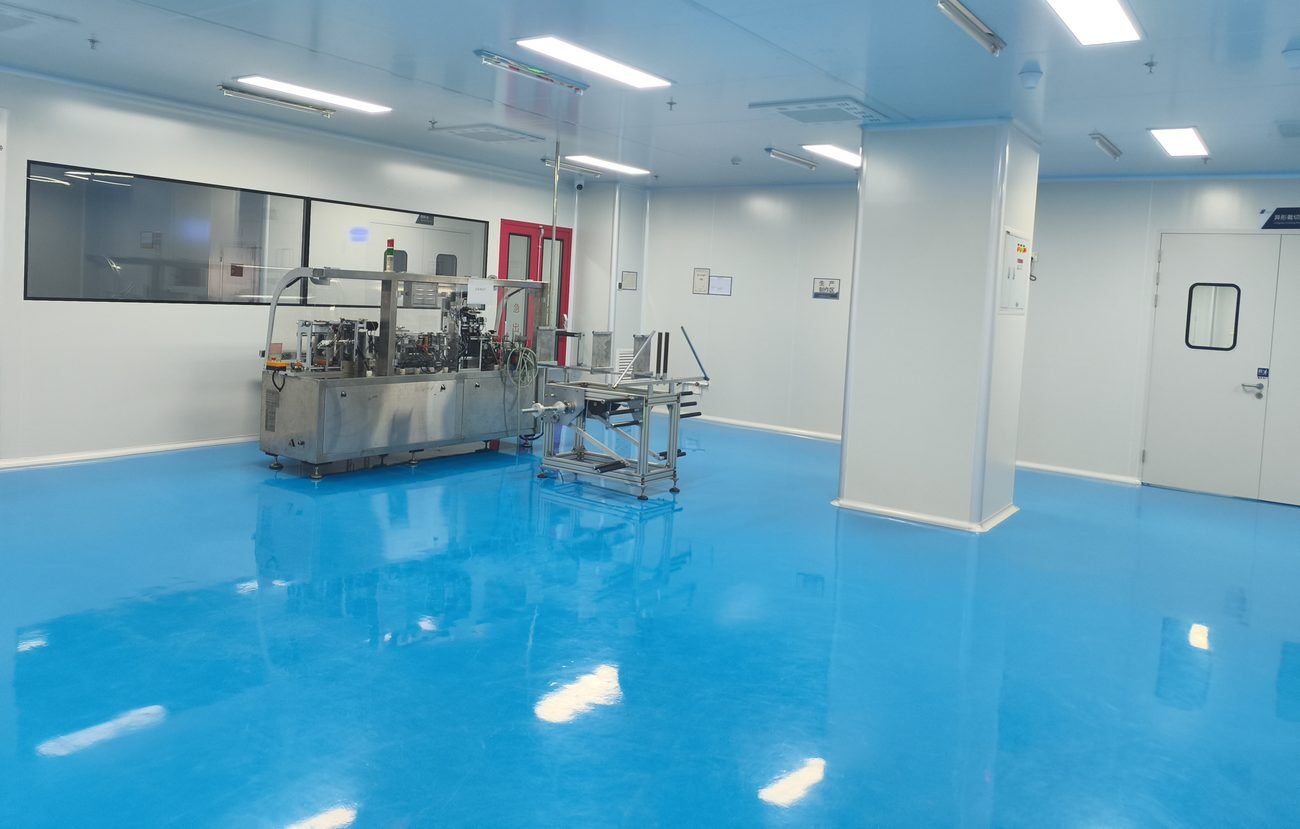 Inside our factory
| Yanse sheet masks at a glance | Spec |
|---|---|
| Substrates | Spunlace · cotton · microfiber · lyocell · two-piece hydrogel · bio-cellulose · chitosan (classic or vegan fungal) |
| Signature | Chitosan soothing mask — functional, film-forming, biodegradable substrate |
| Customisable | GSM, cut pattern & die, essence load, serum formula, pouch & carton |
| MOQ | From 3,000 units per SKU on stock shapes & standard packs (custom die-cut or custom formula from 5,000) → ~1,000,000 / month |
| Sampling | ~72h on ready formulations · custom development ~15 days · 24-hour quote |
| Factory | 8,000㎡ Fujian base · Class-100,000 cleanroom · dual cosmetic & disinfection licences |
| Certifications | ISO 22716, US FDA cosmetic GMP, GMPC, Sedex 4P, FSC, Halal |
| Confidentiality | NNN signed before any artwork or brief |
Sample your mask on three substrates
Send one brief and we'll sample the same serum on the substrates that fit your position — including chitosan — so you can judge fit, essence load and feel in hand rather than on a spec sheet. A shortlist of chitosan suppliers — sorted by whether they are a mill, a converter or a finished-goods factory — is in the chitosan sourcing guide.
Request sheet mask samples →Free sample set · 24-hour quote · MOQ from 3,000 · NNN before any brief
Educational content for brand and product teams. In-vitro data cited is on the chitosan base material (commissioned, non-CMA) and characterises the material for R&D and B2B sourcing; it is not a finished-product efficacy claim. Ingredient and claim rules vary by market and should be confirmed with a regulatory specialist before launch. Yanse Cosmetics is a contract manufacturer (OEM/ODM) and does not sell finished consumer goods under its own brand.