
A pimple patch works by absorbing, not by treating. It is a small disc of hydrocolloid — a gel-forming material borrowed from medical wound dressings — that draws the fluid out of an open spot, holds the area in a clean moist environment while it closes, and physically stops you touching it. That is the whole mechanism, and understanding it tells you exactly when a patch will work and when it will do nothing at all.
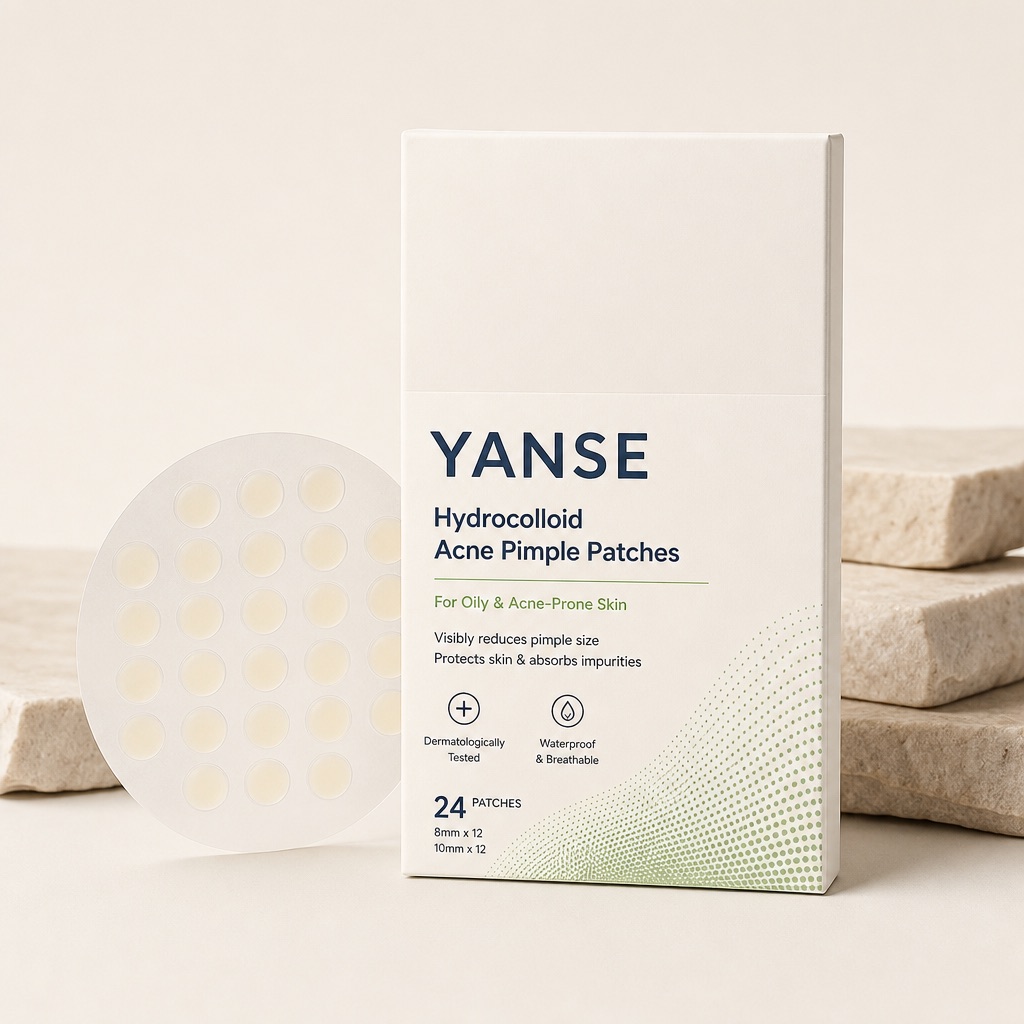 Sample image
The short answer: hydrocolloid
Most pimple patches are made of hydrocolloid — gel-forming polymers held in a skin-safe adhesive. Placed over a blemish, three things happen at once:
- It absorbs. The gel takes up the fluid (exudate) the spot releases and swells as it does.
- It keeps the surface moist. A covered, moist wound surface closes more evenly than one that dries into a scab.
- It blocks your fingers. A physical barrier between you and the spot — which, honestly, is often the part that changes the outcome most.
By morning the spot usually looks flatter and less angry. Nothing has been "pulled out" by force; fluid that was already there has moved into the gel.
Why the patch turns white — and what it is telling you
The white disc that appears after a few hours is not pus sitting on your skin. It is the hydrocolloid itself: as the gel absorbs fluid it swells and goes from clear to opaque white. The white patch is the material doing its job.
That makes it a useful gauge. A patch that turns white quickly and fully has absorbed what it can and should be changed. A patch that is still clear after a full night usually means one of two things: the spot was closed and had nothing to give, or the patch never sealed properly at the edge.
A patch that discolours unevenly, or only at one edge, is usually a seal problem rather than a skin problem — oil or leftover cleanser under the rim stops the adhesive gripping. Clean and dry the area before applying; hydrocolloid does not stick to damp skin.
How long to leave a pimple patch on
The practical answer: 6 to 8 hours, or until the patch has gone white — whichever comes first. Overnight is the normal routine. Beyond about 12 hours there is no added benefit: a saturated patch has stopped absorbing and the adhesive begins to loosen.
| Patch type | Typical wear | Change when |
|---|---|---|
| Standard hydrocolloid | 6–8 h / overnight | Disc has gone fully white |
| Thin "day" / invisible | 4–6 h | Edges lift or it clouds over |
| Medicated (salicylic, tea tree) | Per product instructions | Follow the pack — actives have their own limits |
| Microneedle / microdart | 2–4 h minimum, often overnight | Cones need time to dissolve — do not remove early |
If the spot is still open after one patch, a second one is fine. Full detail, including why day and night patches have different wear windows, is in how long to leave a pimple patch on.
When to put one on — the stage decides everything
Timing matters more than brand. A hydrocolloid patch needs something to absorb, so the window is:
- Best: a whitehead that has come to a head, or a spot that has already opened.
- Good: immediately after a spot has been popped — the patch protects an open wound and keeps you off it.
- Poor: a deep, closed, under-the-skin bump. There is nothing at the surface to draw, so a plain hydrocolloid patch will sit there and do very little. This is what microneedle patches exist for.
What to do after you take it off
Peel slowly from one edge rather than pulling straight up — fast removal on healing skin is what causes the red mark people blame on the patch. Then: rinse, pat dry, and do not squeeze. The spot is at its most fragile right after a patch comes off, and this is the moment most people undo the night's work. Carry on with your normal routine; there is no need to apply anything special.
Where a pimple patch does not belong
This is the part most guides skip, and it is where people waste patches.
| Situation | Use a patch? | Why |
|---|---|---|
| Popped pimple | Yes | It is an open wound — cover, absorb, protect from picking |
| Cold sore | No | A cold sore is viral. Hydrocolloid is not antiviral, and covering it does not address the cause. Use a product made for cold sores |
| Ingrown hair | No | The problem is a trapped hair below the surface, not fluid above it — there is nothing for the gel to absorb |
| Blackhead | No | A blackhead is an oxidised sebum plug, not exudate. It will still be there in the morning |
| Cystic / deep nodule | Not on its own | Nothing at the surface to draw. A microdart patch reaches below it; persistent cystic acne is a dermatologist conversation |
| Boil | No | A boil is a deep bacterial infection of a follicle, not a surface blemish. Covering it does not treat it and can delay proper care — see a clinician |
| Bug bite | No real benefit | A bite is an inflammatory reaction with little exudate. The patch will stop you scratching, which is something — but there is nothing for it to absorb |
| Piercing bump | No | Irritation bumps and keloids around piercings are a different process entirely, and sealing a healing piercing under an occlusive patch is not advisable |
Can you wear makeup over one?
You can, but it rarely looks the way people hope. Foundation sits on the plastic rather than blending into it, and anything oil-based under or over the rim breaks the seal. If the patch needs to be invisible in daylight, a thin day patch with a bevelled edge is the right product — the rim is skinned down so it disappears into the skin instead of sitting proud of it. See bevelled-edge hydrocolloid patches.
What is actually inside a pimple patch
Fewer things than you would guess. A plain hydrocolloid patch is essentially two layers: an absorbent hydrocolloid matrix (gel-forming polymers in a skin adhesive) on a thin backing film that keeps the gel in place and blocks the outside. There is no drug in a standard patch, which is precisely why it is gentle enough to wear all night.
Medicated versions add an active — salicylic acid, tea tree, niacinamide, centella — into the matrix. Microneedle versions are different again: instead of absorbing, they carry dissolving cones that release their payload just under the surface. Our own microdart spot patch runs 120 cones on a single dot at under 300 μm.
Do they actually work — and what about cysts?
For what they are designed to do, yes: a covered spot heals flatter, absorbs cleanly, and is not picked at. That is a real, repeatable benefit and it is why the format went mainstream.
What they do not do: prevent new breakouts, reduce how much oil the skin produces, or treat acne as a condition. And on a cyst — a deep, closed, inflamed nodule — a hydrocolloid patch has essentially no mechanism. It cannot absorb what it cannot reach.
Patches do not remove existing scars. Where they genuinely help is upstream: post-inflammatory marks are strongly associated with picking and squeezing, and a patch is a physical barrier against both. Preventing the damage is the realistic claim; erasing it is not.
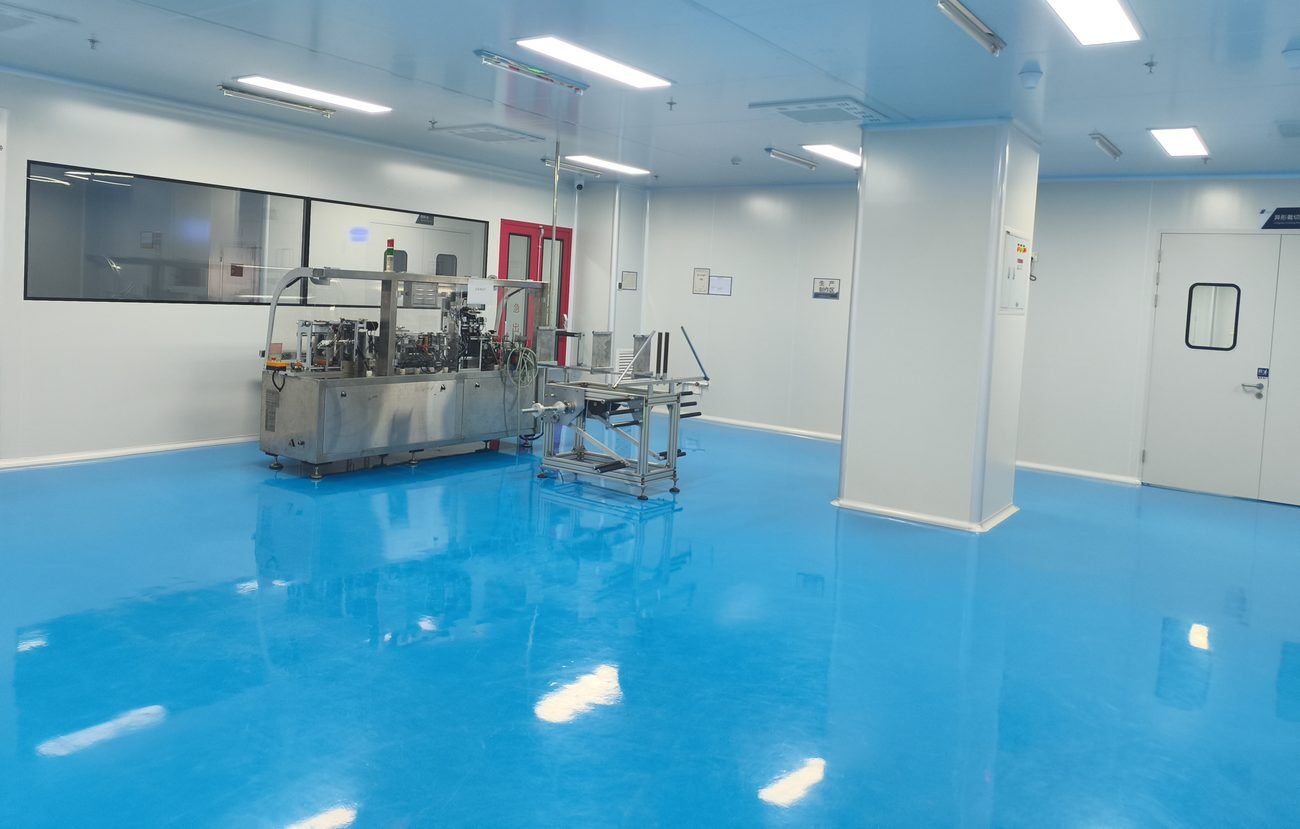 Inside our factory
The three types, and which spot each is for
| Type | How it works | Best for |
|---|---|---|
| Hydrocolloid | Absorbs fluid, protects, moist healing | Whiteheads, open and popped spots, anti-picking |
| Microneedle | Dissolving micro-cones deliver actives below the surface | Early-stage and closed "blind" spots |
| Medicated | Hydrocolloid plus an active (salicylic, tea tree, centella) | Targeted clarifying care |
A fourth option sits alongside these: chitosan patches, where the material itself is functional rather than an inert carrier.
What "best" actually means when you choose one
There is no single best patch, because the variables that matter are not the ones on the front of the box. In order:
- Match the type to the stage — the single biggest factor. A premium hydrocolloid patch on a blind pimple still does nothing.
- Adhesion and edge — a patch that lifts at 3 a.m. has stopped working. Bevelled rims stay down longer and show less.
- Absorbency, not thickness — thin looks better; thicker generally holds more. Day and night patches are answering different questions.
- Size — a disc should cover the spot with a margin, not balance on top of it.
What this means for brands
"How do pimple patches work" is the exact research a shopper does before buying — and every question above maps to a product decision:
- Lead with quality hydrocolloid — absorbency, adhesion and edge profile are where the user experience actually lives.
- Cover the stages, not just the shelf — hydrocolloid for open spots, microdart for closed ones. A range that only answers one stage loses the repeat purchase.
- Differentiate on material or format — exclusive actives such as chitosan, or shapes and print, turn a commodity disc into a brand.
See the full patch range — hydrocolloid, microneedle, chitosan and shape/print — on the acne patch page, or the active-by-active guide in acne patch & pad ingredients.
Building a pimple patch range?
We make hydrocolloid, microneedle and exclusive chitosan patches — plus custom shapes & print — from a 20-year oil & acne specialist. Send a brief and we'll return samples.
Request free samples →Free sample set · 24-hour quote · MOQ from 3,000 · hydrocolloid · microneedle · chitosan
Educational content for brand and product teams. Ingredient and claim information is general and varies by market regulation; finished-product claims should be confirmed against the rules of your target market. Yanse Cosmetics is a contract manufacturer (OEM/ODM) and does not sell finished consumer goods under its own brand.