
Hydrocolloid is a gel-forming, fluid-absorbing material that started life in hospital wound dressings and ended up on the front of every pimple patch on the shelf. The bandage and the pimple patch are the same material — the difference is the size, the backing and what it is sold for. This guide covers what hydrocolloid is, what it does, every format it comes in, where it is the wrong choice, and — for brands — how to specify one properly.
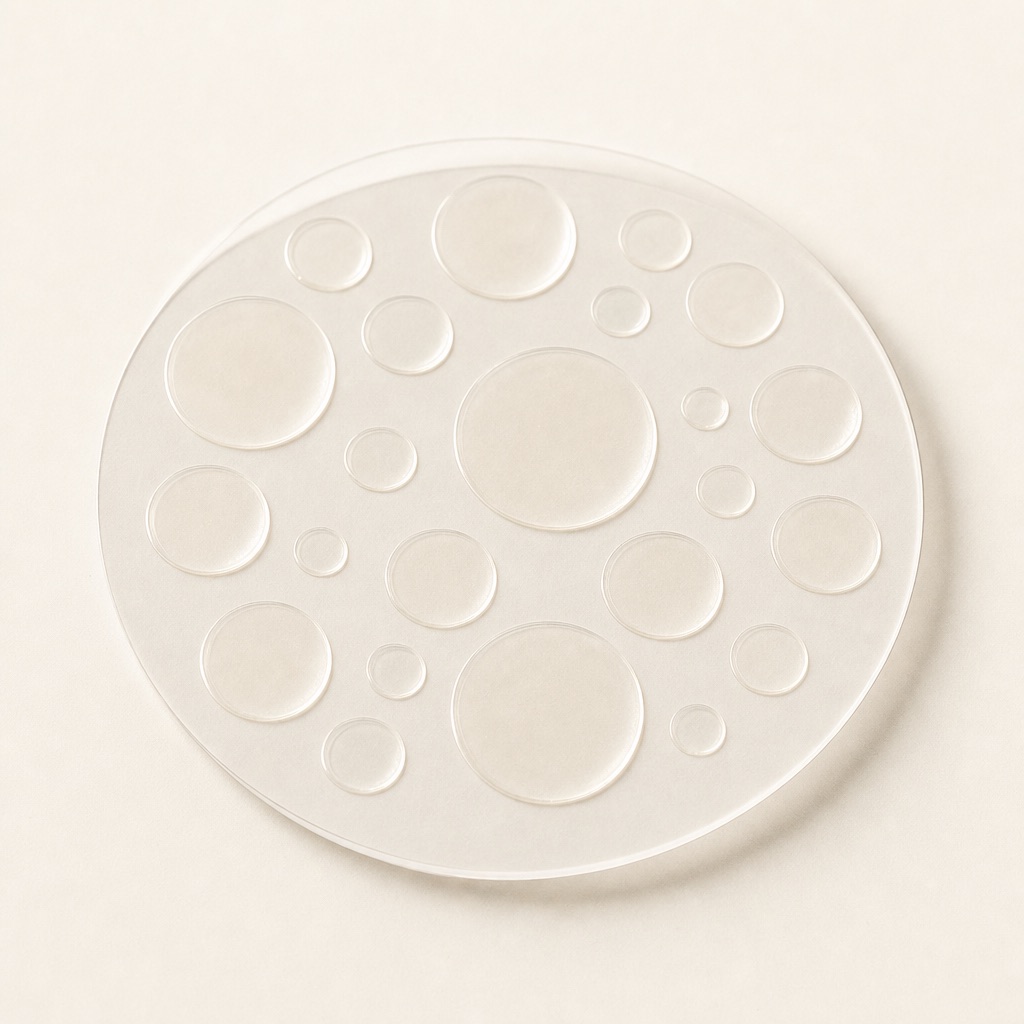 Sample image
What is hydrocolloid?
The word means "water-loving colloid". In practice a hydrocolloid dressing is two layers:
- An absorbent matrix — gel-forming polymers (commonly carboxymethylcellulose, often with pectin or gelatin) dispersed in a skin-safe adhesive.
- A backing film — usually polyurethane, which holds the matrix in place, keeps moisture in and keeps contaminants out.
Put it against skin that is releasing fluid and the polymers take that fluid up and swell into a soft gel against the surface. That is the entire mechanism. No drug is involved in a plain hydrocolloid patch, which is exactly why it is mild enough to wear overnight. How the newer film-forming liquid format compares is in liquid vs hydrocolloid.
Are hydrocolloid bandages and pimple patches the same thing?
Materially, yes — and this is the single most useful thing to understand about the category. A hydrocolloid bandage from the pharmacy and a pimple patch from the beauty aisle are built from the same absorbent gel on the same kind of backing.
What differs is everything around the material:
| Hydrocolloid bandage / dressing | Hydrocolloid pimple patch | |
|---|---|---|
| Sold as | A wound-care product | A cosmetic product |
| Size | Large — blisters, grazes, larger areas | Small discs, typically 7–14 mm |
| Thickness | Thicker; built for higher fluid volume | Thin; built to be invisible on a face |
| Edge | Square or rounded, visible | Often bevelled so the rim disappears |
| Regulatory route | Regulated as a medical device in most markets | Usually a cosmetic — route depends on the market and the claims |
Because the two routes are regulated differently, a cosmetic pimple patch is not a wound dressing and should not be presented as one, even though the material is related. The claims you can make follow the route you register on, not the material you use.
What hydrocolloid is used for
Beyond spots, the same material is used across everyday skin repair:
- Blisters — the best-known non-acne use. The gel cushions the area and keeps it moist while it closes, which is why blister plasters are hydrocolloid.
- Shallow grazes and minor wounds that release a little fluid.
- Post-procedure and post-extraction skin, where the point is to cover and stop picking.
- Pimples — hydrocolloid patches and dressings for pimples are the cosmetic version of the same material, and by volume now the biggest use of all.
It is not a general-purpose plaster. On a dry wound there is nothing for it to absorb, and it will simply sit there.
Is DuoDERM the same as a hydrocolloid dressing?
DuoDERM is a long-established brand of hydrocolloid dressing, and it is often used as shorthand for the whole category in the way people say "Band-Aid" for any plaster. It is a hydrocolloid dressing; hydrocolloid dressings are not all DuoDERM. The category includes many medical brands and, now, hundreds of cosmetic patch brands built on the same material class.
Why it turns white
The white disc that appears after a few hours is the hydrocolloid itself, not pus sitting on the skin. As the polymers take up fluid they swell and go from clear to opaque. The white area is a direct readout of how much the patch has absorbed — and a patch that has gone fully white has finished its job.
A patch still clear after a full night usually means one of two things: there was nothing at the surface to absorb, or the rim never sealed. Hydrocolloid does not stick to damp or oily skin — clean and dry the area first.
How long to leave it on, and when to change it
6 to 8 hours, or until it has gone white — whichever comes first. Overnight is the standard routine for a spot patch. A larger bandage over a blister can stay on longer, often two to three days, but the rule is the same: change it when the gel is saturated, when fluid reaches the edge, or when the seal starts lifting. Leaving a saturated dressing on does not add benefit, because a saturated gel has stopped absorbing.
Full detail on wear windows, including why day and night patches differ, is in how long to leave a pimple patch on.
How to remove one without damaging the skin
Do not pull it straight up. Press the skin down with one finger and peel slowly from one edge, low and flat, in the direction the hair grows. If it is gripping hard, warm it first — a warm damp cloth held over the patch for thirty seconds softens the adhesive. Fast vertical removal on freshly healed skin is what causes the red mark people then blame on the patch itself.
Where hydrocolloid is the wrong choice
| Situation | Suitable? | Why |
|---|---|---|
| Whitehead / open spot | Yes | Fluid at the surface is exactly what the gel absorbs |
| Blister | Yes | Cushions and keeps the area moist while it closes |
| Blackhead | No | An oxidised sebum plug is not exudate — there is nothing to absorb |
| Cyst / deep nodule | No | Nothing at the surface to draw. The gel cannot reach what is below |
| Deep or heavily bleeding wound | No | Beyond what an absorbent dressing is for — this needs a clinician |
| Burns | Only on clinical advice | Hydrocolloid has a place in managing some superficial burns, but assessing a burn is not something to do from a web page. Anything beyond a small superficial burn should be seen |
| Infected skin | No | An occlusive dressing over an infection traps it. Infection needs treating first |
Does hydrocolloid help scars?
It does not remove an existing scar. Where it genuinely contributes is earlier in the chain: covered, moist healing tends to produce a flatter, more even surface than a wound that dries into a scab and gets knocked off — and on spots specifically, a patch is a physical barrier against picking and squeezing, which is strongly associated with post-inflammatory marks. Preventing the damage is the honest claim; erasing it is not. Silicone, not hydrocolloid, is the material associated with managing established scars.
The formats hydrocolloid comes in
| Format | What it is | Typical use |
|---|---|---|
| Spot patch | Small die-cut discs on a release liner | Individual spots — the volume format |
| Large patch / cover | Bigger shapes for cheek, chin, forehead | Clusters, post-extraction areas |
| Bandage / dressing | Sized like a plaster, thicker matrix | Blisters, grazes |
| Rolls / tape | Continuous hydrocolloid supplied in rolls and cut to size | Any shape or length — the fastest-growing format. See hydrocolloid tape & roll |
| Printed / shaped | Stars, hearts, custom die-cuts, full-colour print | Expression-led brands |
The main hydrocolloid types
| Type | What it adds | Use |
|---|---|---|
| Basic / classic | Reliable absorption & protection | Everyday whiteheads |
| Day (ultra-thin) | Invisible under makeup | Daytime, office |
| Night (thick) | Stronger draw | Overnight on bigger spots |
| Multi-size | One pack, every spot | Convenience / subscription |
| With actives | Salicylic, tea tree, niacinamide | Targeted care |
| Shape & print | Stars, hearts, patterns | Gen-Z, expression |
Two things make a hydrocolloid patch feel premium: how thin and blendable it is, and how strongly it adheres and absorbs. Cheap patches are thick, shiny and peel off. That gap in feel is where a quality manufacturer wins.
Beyond plain hydrocolloid
Plain hydrocolloid is a commodity — everyone makes it. The ways to stand out: microneedle patches that deliver actives below the surface for blind spots; medicated patches with salicylic or tea tree; novel actives like chitosan (film-forming, barrier-friendly) that few makers offer; and shapes & print for self-expression. A range usually pairs a volume hydrocolloid hero with one differentiated tier.
How brands choose (or private-label) one
- Feel first — specify thin, blendable, strong-adhesion hydrocolloid; it's the whole experience.
- Pick the tiers — day/night, multi-size, with-actives, shapes — to cover your audience.
- Differentiate — a novel active (chitosan), microneedle, or a shape/print identity.
- Commercials — MOQ, count per pack, packaging and target price.
The six specs to quote a hydrocolloid patch on
"Good hydrocolloid" is not a specification. These six are, and they are what separates two patches that look identical in a photo:
| Spec | What to ask for | Why it decides the experience |
|---|---|---|
| Thickness | Stated in mm, per tier | Thin disappears on skin; thicker holds more fluid. Day and night patches are answering different questions — one number cannot serve both |
| Absorbency | Fluid uptake, not just "high" | The difference between a patch that is white by midnight and one still clear at dawn |
| Adhesion | Peel force, plus wear claim in hours | A patch that lifts at 3 a.m. has stopped working, however good the gel is |
| Edge profile | Square vs bevelled | A bevelled rim is skinned down so it blends instead of sitting proud — the main reason some patches vanish under light and others catch it |
| Diameter & set | Exact mm per size in the pack | A disc should cover the spot with a margin. Multi-size packs sell on this alone |
| Backing film | Material and finish (matte vs gloss) | Matte reads as skin; gloss reads as plastic in photographs and in daylight |
Ask a supplier to quote the same patch at two thicknesses and tell you what each one costs you in absorbency and in visibility. A factory that actually coats hydrocolloid will answer with numbers and a trade-off. A trading desk will tell you both are excellent.
See hydrocolloid, microneedle, chitosan and shape patches on the acne patch page; how the actives compare in acne patch & pad ingredients; and the basics in how do pimple patches work.
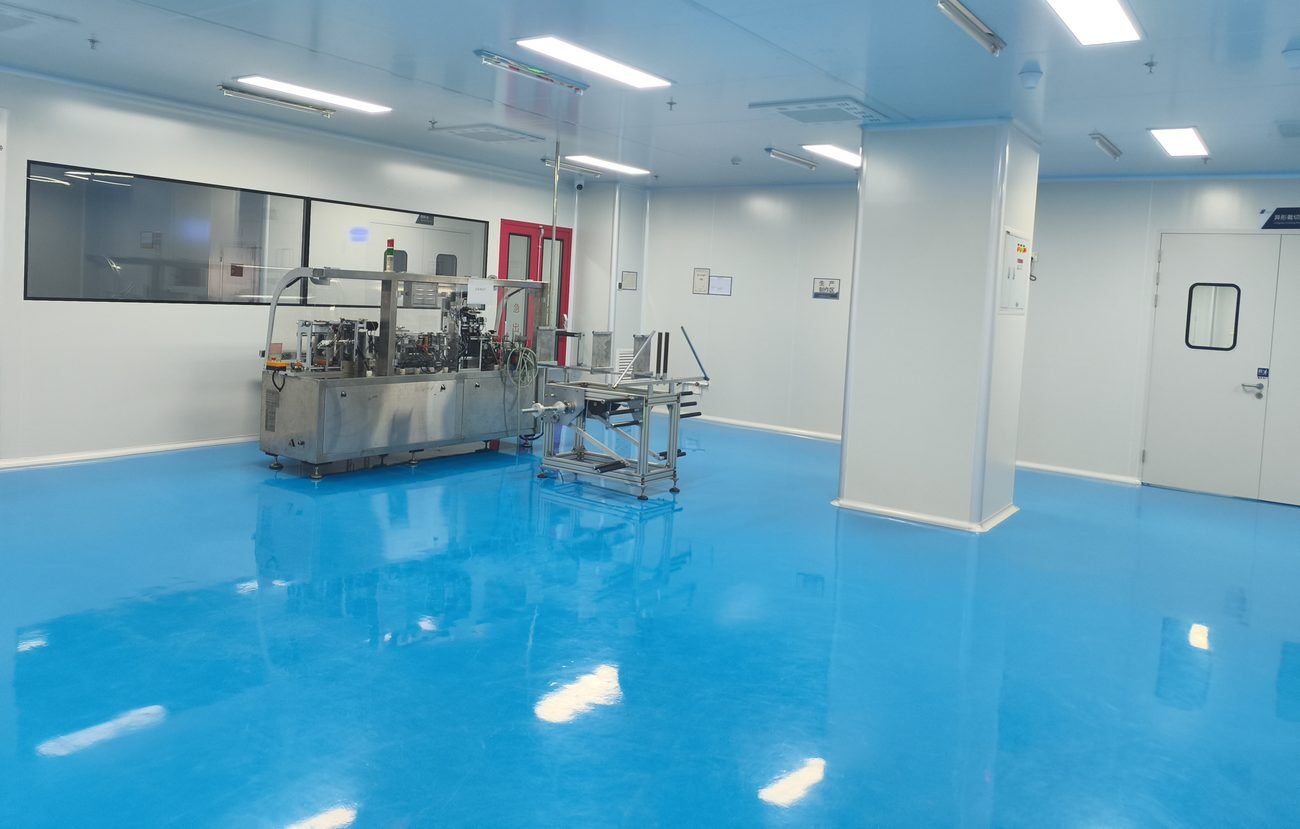 Inside our factory
Making them with an OEM
A specialist in oil & acne care can make quality hydrocolloid patches at every tier — plus microneedle and exclusive chitosan — with custom shape, print, count and packaging, low MOQ and trial batches. Request a patch sample set on the acne patch page.
Private-label a hydrocolloid patch that stands out
Quality hydrocolloid at every tier — plus microneedle and exclusive chitosan, custom shapes & print — from a 20-year oil & acne specialist. Tell us your concept and we'll send samples.
Request free samples →Free sample set · 24-hour quote · MOQ from 3,000 · hydrocolloid · microneedle · chitosan
Educational content for brand and product teams. Ingredient and claim information is general and varies by market regulation; finished-product claims should be confirmed against the rules of your target market. Yanse Cosmetics is a contract manufacturer (OEM/ODM) and does not sell finished consumer goods under its own brand.